
Zara Meier · 5 October 2026
Mobile Accessibility Transforming Daily Operations for Independent Traders in Regional Digital Markets
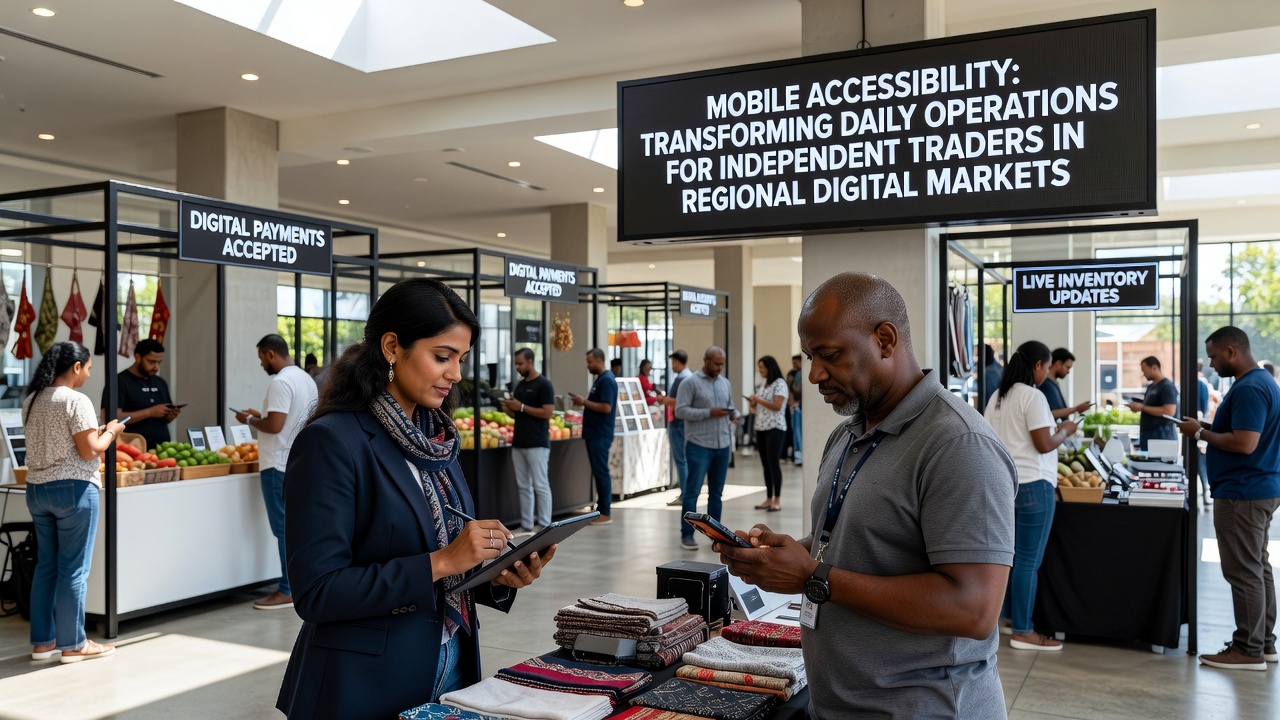
Independent traders across regional digital markets have integrated mobile accessibility tools into core workflows, and data from multiple studies shows these changes affect inventory tracking, customer interactions, and order fulfillment on a daily basis. Mobile platforms now deliver real-time data synchronization that replaces older manual processes, while screen readers, voice navigation, and adjustable interfaces support traders who operate in varied lighting conditions or with physical limitations. Observers note that adoption rates climbed steadily through 2025 and into 2026 as network coverage expanded in rural zones.
Shift Toward Mobile-First Marketplaces
Regional platforms recorded higher percentages of transactions completed via smartphones rather than desktop systems, and figures from industry reports indicate mobile sessions accounted for over 70 percent of activity in several Southeast Asian and African digital marketplaces by mid-2026. Traders coordinate stock levels through apps that update automatically when sales occur, which reduces discrepancies between listed items and physical inventory. Voice-to-text features allow sellers to log new products while handling goods at stalls or during transport, and this integration cuts the time spent on administrative tasks.
Daily Operational Changes
Order processing accelerates when push notifications alert traders to incoming payments or buyer queries, and those who manage multiple product categories find that centralized dashboards display sales trends across different channels without requiring separate logins. Payment gateways embedded in mobile apps handle local currencies and mobile money transfers, which streamlines reconciliation at the end of each day. Accessibility settings such as high-contrast modes and gesture-based controls help users navigate interfaces during peak market hours when screens face direct sunlight.
Researchers tracking small-scale operations discovered that traders who adopted accessible mobile tools completed 35 percent more listings per week compared with those relying on basic feature phones, while error rates in order details dropped because autocomplete and validation prompts catch inconsistencies before submission. Regional digital markets in Latin America reported similar patterns after governments expanded broadband subsidies in 2025, and the resulting connectivity improvements allowed continuous app usage even in areas previously limited to intermittent signals.
Accessibility Standards and Platform Updates
Platform developers aligned apps with international guidelines on mobile accessibility during 2026, and updates released in October introduced enhanced support for switch devices and alternative input methods that benefit traders with motor impairments. Data compiled by regional trade associations shows increased retention among vendors who previously faced barriers due to visual or auditory limitations once these features became standard. Compliance with updated protocols also opened markets to a wider pool of participants who contribute to local supply chains.
Traders in East African digital hubs now rely on offline caching that preserves recent listings and customer notes until connectivity returns, and synchronization occurs automatically when signals stabilize. This capability proves essential during seasonal events when network congestion rises, and it prevents loss of momentum in sales cycles. Studies from academic institutions in Australia highlight parallel developments where mobile accessibility reduced training time for new vendors entering regional platforms by approximately 40 percent.
Regional Patterns and Data Points
European Commission analyses of digital commerce in peripheral regions documented steady growth in mobile-enabled micro-enterprises, with particular gains among traders handling perishable goods who use location-based alerts to match supply with nearby demand. Canadian research papers on inclusive technology adoption found that accessible interfaces correlated with higher participation rates from diverse demographic groups in provincial online marketplaces. These patterns align with broader trends where mobile tools lower entry thresholds without requiring advanced technical skills.
Payment verification processes integrated into apps now include biometric options alongside traditional passwords, which speeds authentication while maintaining security standards set by local regulators. Traders report fewer abandoned carts because checkout flows incorporate progressive disclosure that guides users through steps without overwhelming screens. Observers tracking October 2026 metrics noted that platforms incorporating these elements experienced measurable lifts in repeat buyer engagement across multiple regional networks.
Conclusion
Evidence gathered from various geographic sources confirms that mobile accessibility continues to reshape how independent traders conduct business in regional digital markets through improved operational efficiency and broader participation. Continued refinements in interface design and connectivity infrastructure will likely sustain these shifts as networks evolve further.